








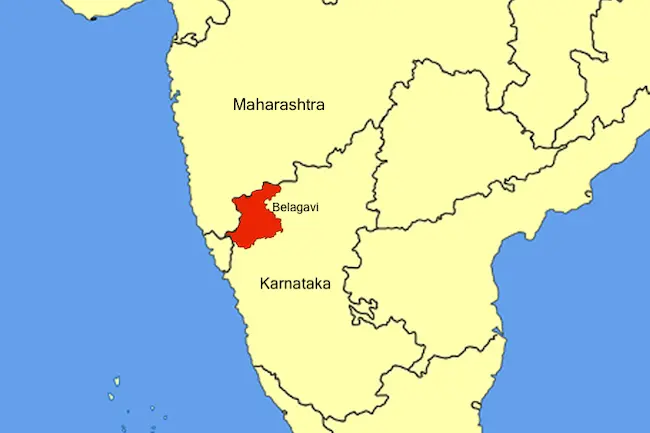
Belagavi, one of Karnataka’s largest districts, has once again become the center of debate as activists and politicians push for its division into smaller districts like Gokak and Chikodi. Citizens across urban and rural taluks have joined the conversation, raising questions about governance, development, and identity.
Supporters of the split argue that a smaller administrative setup would bring government services closer to residents, reduce delays in public works, and ensure more focused attention on remote taluks. Advocates also point to the uneven pace of development across Belagavi: while the city and nearby towns have seen infrastructure improvements, remote areas continue to lag in access to healthcare, education, and transport facilities.
What Politicians Say
Several political leaders have publicly weighed in on the issue:
Balachandra Jarkiholi, Arabhavi MLA and chairman of BEMUL, said, “For better governance, Belagavi must be divided.” He urged the Chief Minister to declare Gokak and Chikodi as new districts, noting that demand for Gokak’s district status has persisted for nearly 40 years, describing the movement as an “apolitical” call for administrative efficiency.
Satish Jarkiholi, District In-charge & PWD Minister, reignited the debate, arguing that creating Chikodi and Gokak as separate districts would make administration more efficient.
Leaders across party lines, including Minister Laxmi Hebbalkar and ex-CM/Belagavi MP Jagadish Shettar, have also voiced support, citing the district’s size, administrative load, and potential benefits of trifurcation.
However, the issue is not without contention. Some taluks, such as Bailhongal, want their own districts, while others like Athani seek restructuring of taluks first. These conflicting demands make the debate complex, with competing claims from different regions. Activists and local organisations, including the Gokak District Formation Struggle Committee, are intensifying pressure ahead of the winter legislative session to push for formal approval before any delimitation freeze.
Why the Belagavi District Split Debate Matters More Than Ever
For decades, the question of whether Belagavi should be divided into smaller districts has surfaced, faded, and resurfaced again. But this time, the debate is not just louder — it is more urgent, more emotional, and more politically charged than ever before. The calls for new districts such as Gokak and Chikodi have travelled far beyond political rallies. They have reached households, WhatsApp groups, student circles, self-help collectives, religious institutions, and business communities across the region.
Some may dismiss the split as a purely political demand. But that ignores a deeper truth: Belagavi is simply too large, too complex, and too diverse to be governed as a single unit without friction. With 18 taluks, a heavy administrative load, and vast geographic spread, residents across remote areas have genuine concerns that deserve attention. When people from Gokak or Chikodi say, “It takes us hours to finish one simple task at the district office,” they are not exaggerating — they are describing a lived reality.
Similar News: CM Siddaramaiah To Arrive in Belagavi Tomorrow Ahead of Crucial Winter Session
Yet, if political voices are clear, the public mood is not. Residents from Bailhongal and Savadatti argue that they don’t want to be merged under somebody else’s headquarters. Athani has its own set of cultural and economic logic for how boundaries should be drawn. What one taluk sees as progress, another sees as loss of identity. This complexity is not a weakness — it is proof that the people of Belagavi care deeply about how they are governed.
As the Winter Session approaches and the delimitation freeze looms, the government faces a difficult but unavoidable choice. Acting too fast risks creating poorly planned districts. Acting too slow risks missing the window entirely and letting decades of public demand slip away again.
What Should The Government Do?
Listen. Not just to MLAs. Not just to committees. But to farmers, small business owners, students, and citizens in remote taluks who live the consequences of governance gaps every day. Administrative reform should not be a top-down map exercise. It must be rooted in public consultation, ground-level data, and transparency.
Whether Belagavi is divided into two districts, three districts, or not at all, one fact remains: the people have made it clear that the conversation cannot be ignored anymore. Whatever decision the state takes must reflect not just political calculus but the aspirations of the people who call this region home.
👉 Winter Session 2025 @Belagavi: Want to follow live updates, protests or developments? Keep eyes on @belgaum_mirror on Instagram & WhatsApp channel – join now: bit.ly/bmwhatsappchannel