







 Bengaluru | Chief Minister D.K. Shivakumar’s newly formed Karnataka government has encountered its first major political setback with senior Congress leader Ramalinga Reddy resigning from the Cabinet just days after taking oath as a minister. The development has sparked intense discussion within Congress circles and drawn attention to growing concerns over portfolio allocation among senior leaders.
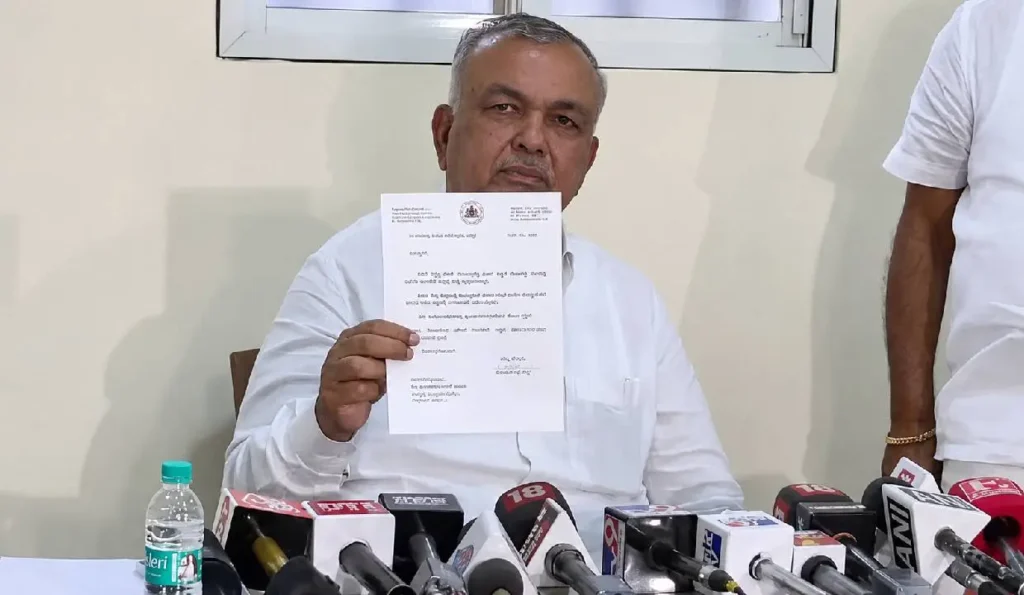
Ramalinga Reddy, an eight-time MLA and one of the party’s most senior leaders in Bengaluru, announced his resignation after being allotted the Water Resources portfolio. He publicly stated that he had expected the Bengaluru Urban Development portfolio and alleged that assurances made during discussions on Cabinet formation were not honoured.
Similar News: Who Got What? DK Shivakumar Cabinet Portfolios Revealed
In his resignation letter addressed to Chief Minister D.K. Shivakumar, Reddy thanked the Chief Minister and the Congress party for inducting him into the Cabinet. However, he said he could not work against his conscience and therefore wished to step down from the ministerial position. The phrase quickly became the focal point of political discussion across the state.
Addressing the media, Reddy expressed frustration over what he described as repeated humiliation and maintained that accepting the assigned portfolio would have been against his principles. Despite resigning from the Cabinet, he clarified that he would continue as the MLA from BTM Layout and remain a loyal Congress worker.
Adding to the political discomfort for the government are reports that senior leader and Food Minister K.H. Muniyappa is also unhappy with the portfolio assigned to him. Political discussions in Bengaluru suggest that Muniyappa has conveyed his displeasure and is seeking a different department. However, unlike Ramalinga Reddy’s resignation, there has been no official announcement of resignation from Muniyappa, nor has the Congress leadership publicly confirmed any such move. Therefore, reports of a possible resignation remain purely speculative at this stage.
While portfolio negotiations are not uncommon in Karnataka politics, the public nature of Ramalinga Reddy’s resignation has amplified concerns about internal coordination within the new government. The twin episodes of Ramalinga Reddy’s resignation and reports of dissatisfaction from K.H. Muniyappa present an early test for Chief Minister D.K. Shivakumar as he seeks to maintain unity within the Congress and manage expectations among senior leaders.