












 Modern medicine has made remarkable advances in diagnosing and treating disease, but prevention continues to be the most effective form of healthcare. Among the many preventive measures available today, routine health check-ups remain one of the simplest and most valuable ways to safeguard long-term health and improve quality of life.
Many serious illnesses develop silently over several years before any symptoms appear. Conditions such as hypertension, diabetes, high cholesterol, heart disease, kidney disorders and even certain cancers often progress unnoticed until complications arise. Regular health screenings help identify these diseases at an early stage, allowing timely treatment that can significantly reduce the risk of disability, long-term complications and premature death.
India is experiencing a steady rise in non-communicable diseases, particularly cardiovascular disease, diabetes, metabolic disorders and cancer. These illnesses now account for a significant portion of the country’s healthcare burden, placing emotional as well as financial pressure on families. Unfortunately, many patients seek medical care only after symptoms become severe, when treatment is often more difficult, more expensive and less effective.
Routine health check-ups provide an opportunity to detect both diseases and their risk factors before they become serious. Early diagnosis often means simpler treatment, better outcomes and lower medical expenses. In this sense, preventive health screening should be viewed not as an unnecessary cost, but as an investment in a healthier future.
Maintaining good health also requires adopting healthy lifestyle habits. A balanced diet, regular physical activity, adequate sleep, effective stress management and avoiding tobacco and excessive alcohol remain the foundation of disease prevention. However, lifestyle alone cannot detect silent illnesses. Periodic medical evaluations provide an additional layer of protection by identifying health problems before they cause irreversible damage.
As a general guideline, adults below the age of 30 should undergo a comprehensive health check-up once every three years. Individuals between 30 and 40 years should consider screening every two years, while annual health check-ups are recommended after the age of 40. People with a family history of diabetes, hypertension, heart disease, cancer or other major illnesses may require more frequent assessments based on their doctor’s advice.
A comprehensive health examination should always be conducted under the supervision of a qualified primary care physician. Depending on an individual’s age, medical history and risk profile, investigations may include blood and urine tests, blood pressure monitoring, blood sugar and cholesterol assessment, cardiac tests such as ECG or TMT, and imaging studies including chest X-rays, ultrasonography or echocardiography whenever clinically indicated.
Beyond identifying disease, routine health check-ups promote greater health awareness, strengthen the doctor-patient relationship and encourage healthier lifestyle choices. Widespread adoption of preventive screening can also reduce the overall burden of disease within communities, leading to a healthier and more productive society.
Good health is more than simply the absence of illness. It is a state of complete physical, mental and social well-being. Investing a small amount of time in routine health check-ups today can help prevent major health problems tomorrow, making preventive healthcare one of the smartest investments anyone can make.

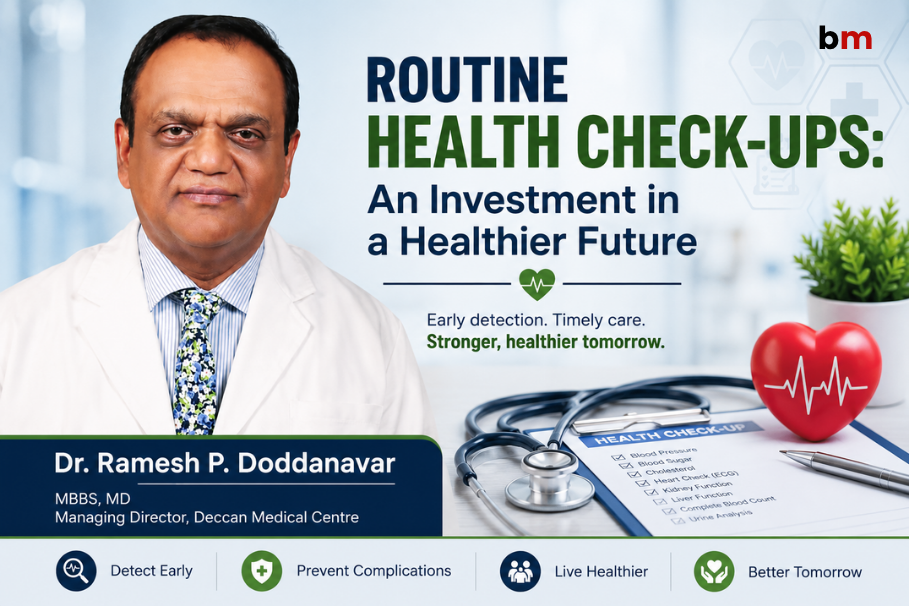
By Dr. Ramesh P. Doddanavar (MBBS, MD)
Managing Director, Deccan Medical Centre