












 A groundbreaking medical innovation combining trained dogs and artificial intelligence is set to enter clinical trials in Belagavi, offering new hope for early cancer detection through a simple breath test.
The development follows a large-scale study published in the Journal of Clinical Oncology, where researchers demonstrated that trained dogs could detect cancer from breath samples with over 90% accuracy. The findings are being hailed as a potential game-changer in making cancer screening more accessible, especially in regions with limited healthcare infrastructure.
The study, conducted across multiple hospitals in Karnataka, involved over 1,500 participants, including both cancer patients and healthy individuals. Researchers found that the method could identify a wide range of cancers, including breast, lung, gastrointestinal, and head and neck cancers, with strong accuracy even in early stages of the disease.
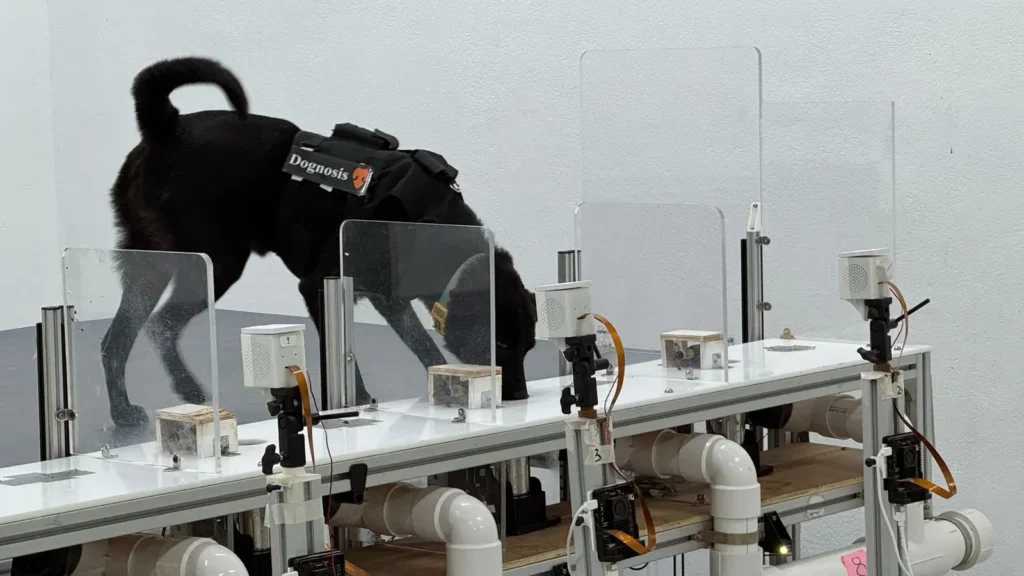
The process is simple and non-invasive. Individuals breathe into a cotton mask for around 10 minutes, which is then sealed and analyzed. Specially trained dogs assess the samples by detecting volatile organic compounds—chemical signatures released due to cancer-related metabolic changes. Their responses are then processed using advanced Bayesian statistical models to ensure consistency and reliability.
Unlike conventional screening methods, this technique eliminates the need for blood tests, scans, or fasting, making it particularly suitable for large-scale community screening.
Belagavi is now set to play a crucial role in advancing this innovation. Clinical trials are expected to begin soon in collaboration with KLE Hospitals, Lakeview Hospital, and district health authorities. These trials aim to test the effectiveness of the technology in real-world conditions, including rural and semi-urban populations.
Medical experts see immense potential in this approach. Dr. B.R. Patil, Chief Cancer Surgeon at KCTRI, Hubballi, highlighted the urgent need for early detection tools in India, where many cancer cases are diagnosed at advanced stages. He noted that breath-based detection could serve not only as a screening tool but also help monitor treatment progress and detect recurrence early.
The technology is being developed by Indian startup Dognosis, which is also integrating AI systems to analyze canine behavior and scale the solution. By combining biological detection with machine learning, the company aims to process large volumes of samples efficiently, potentially screening millions each year.
While researchers caution that further validation is needed before widespread adoption, the upcoming trials in Belagavi mark a significant step toward transforming cancer diagnostics. If successful, this low-cost and non-invasive method could dramatically improve early detection rates and reduce the burden on healthcare systems.