






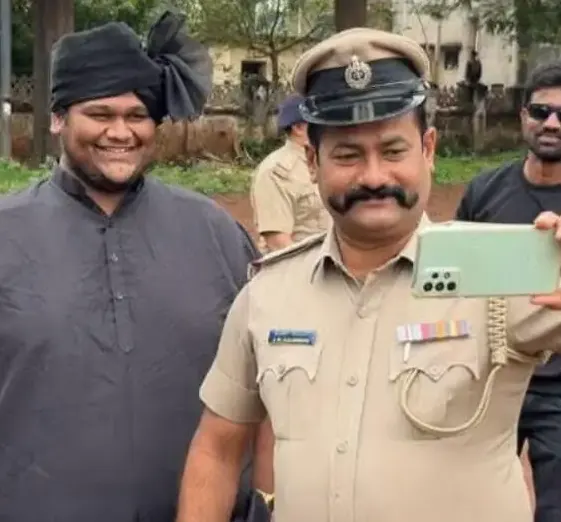
Belagavi, Nov 6: A disciplinary move has been taken against an officer in the wake of a highly-visible controversy during the Kannada Rajyotsava celebrations in Belagavi. The city administration has transferred JM Kalimirchi, Circle Police Inspector (CPI) of the Malmaruti Police Station, after a photograph showing him taking a selfie with Maharashtra Ekikaran Samiti (MES) leader Shubham Shelake went viral. The MES had observed the day as a “Black Day” in protest on linguistic-border issues.
What Happened
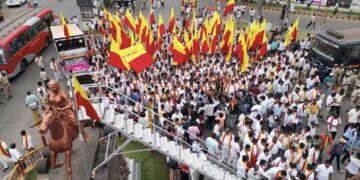
On November 1, during Rajyotsava, MES activists held a protest in Belagavi, marking the day as “Black Day” amid long-standing demands for merger of Belagavi and adjacent Marathi-speaking areas with Maharashtra.
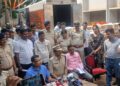
While deployed for security, CPI Kalimirchi was seen capturing a selfie with Shelake at Sambhaji Park. The act triggered widespread outrage among Kannada-language and regional activists who interpreted it as an official aligning with an anti-Kannada outfit.
Government Response
The state government swiftly responded. Home Minister G. Parameshwara announced action would be taken, warning that any official undermining the dignity, language or identity of Karnataka would be held accountable.
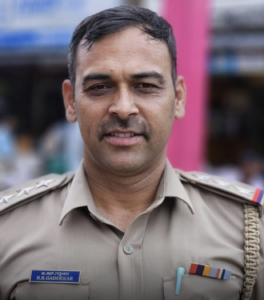
Accordingly, CPI Kalimirchi has been moved out of his post. His replacement is B.R. Gaddekar, who has been appointed as the new Inspector for the Malmaruti Police Station.
Context: The Border Dispute
This incident must be seen against the backdrop of the long-running Belagavi border dispute, in which MES consistently raises the demand for Marathi-majority areas to merge with Maharashtra. During Rajyotsava this year, the issue resurfaced as protests and counter-demands for Kannada identity formed a major theme.
Why This Matters
For Belagavi—an area with a mixed Kannada-Marathi heritage—actions by government officers are under high scrutiny. The selfie, whether intentional or casual, was interpreted as signaling official sympathy to a community viewed by many as opposed to Kannada state-pride. That perception triggered the swift move by authorities.
For the public and media, this case raises questions about neutrality of law-enforcement in ethnolinguistic contexts and the optics of public servants engaging in politically charged moments.